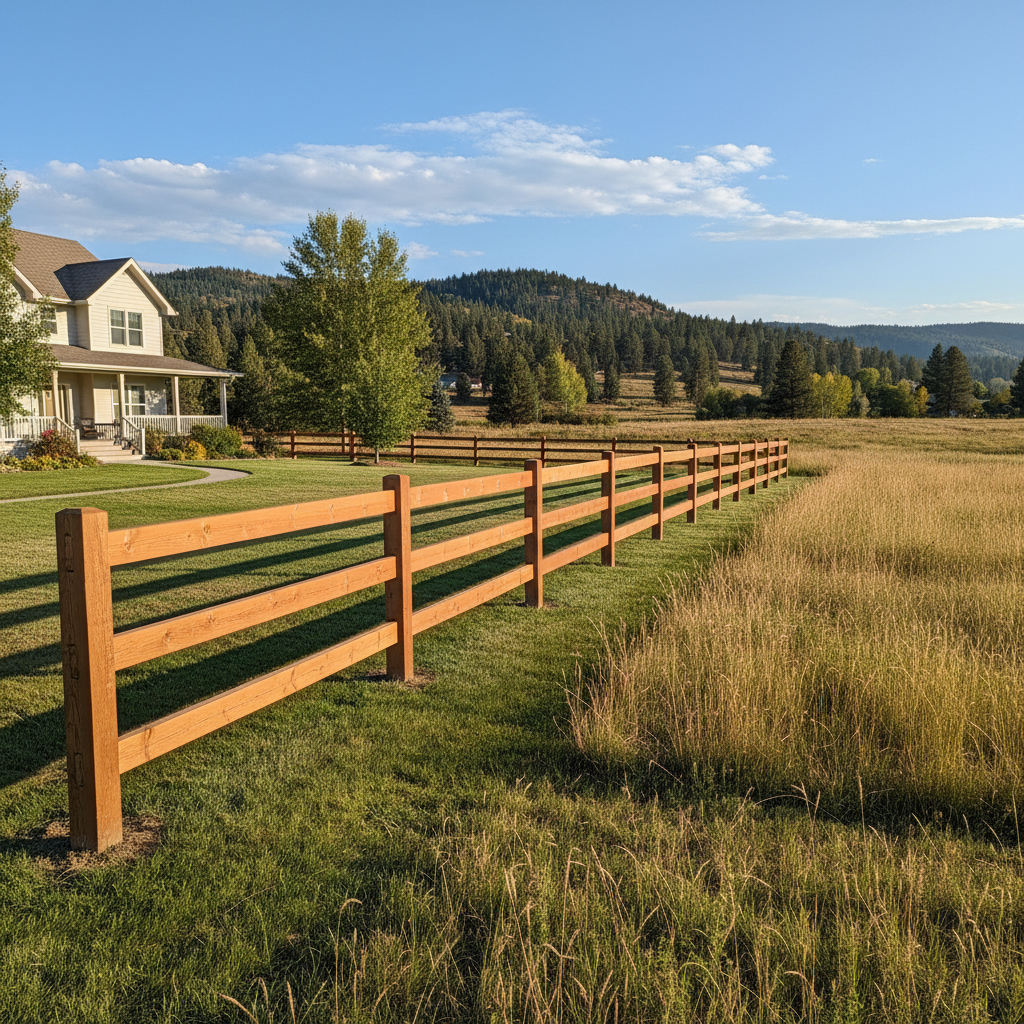
Make Your Farm Fence Last: It's All About the Details
You've poured good money and effort into your farm fence, right? Whether it's keeping cattle in, horses safe, or just clearly marking your property lines out near Lolo or the Bitterroot, you want that fence to hold up. And here in Missoula, with our crazy freeze-thaw cycles, heavy snows, and sometimes scorching summers, "holding up" takes a bit of work. I've seen too many good fences go south because folks skip the simple stuff. Making your fence last longer isn't some big secret formula; it just means giving it smart, consistent attention.
First off, think about what's touching your fence. Any plants? Weeds, brush, even small trees growing right up against posts or wires are a definite no-no. They hold moisture against the materials, which really speeds up rot in wood posts and corrosion in metal. Plus, they can short out electric fences. Grab a weed eater or some herbicide and keep a clear zone around your fence line. A good 1-2 foot clear strip on both sides makes an enormous difference. Another thing to consider is proper grounding for electric fences. If your ground rods aren't deep enough or they're corroded, your fence won't have the zap it needs, and livestock will test it more often, leading to extra wear and tear.
Regular Maintenance: Your Fence's Best Friend
So, what does "consistent attention" actually look like? For farm fences, it's pretty straightforward. You should be walking your fence lines regularly. I'm talking at least once a month during the growing season, and definitely after any big weather event – a heavy snow, a wind storm, or a massive rain. What are you looking for?
- Tension: Are your wires sagging? Loose wires are, well, useless wires. They let animals through and are much more likely to break. You'll need a wire stretcher for barbed or woven wire, or a tensioning tool for high-tensile.
- Posts: Are they standing straight? Are they wobbly? Wood posts can rot right at the ground line, especially in our heavy clay soils around the Missoula Valley, which really hold onto moisture. Metal posts can bend or pull out. Give them a good push. If they move too much, they need some love.
- Insulators: For electric fences, check for cracked or missing insulators. A bare wire touching a post or vegetation creates a short circuit, and your fence won't be hot.
- Gates: Gates take a beating, don't they? Check hinges, latches, and any sag. A sagging gate puts stress on the posts and makes it a pain to open and close. Adjust turnbuckles or reinforce hinges as needed.
- Rust and Corrosion: On metal parts, rust is the enemy. Deal with it early using a wire brush and rust-inhibiting paint. For wood, look for rot, especially where the post goes into the ground.
Seriously, don't wait until you've got cows in your garden to fix a problem. A little proactive work now saves you a ton of headache and expense later on.
Warning Signs: Don't Ignore These Red Flags
Your fence will tell you when it's in trouble, if you're just willing to listen. Beyond the obvious broken wire or leaning post, there are subtler signs. You might notice animals testing the fence more often – that's a clue the electric charge isn't strong enough or they've found a weak spot. Or maybe you're seeing more wildlife getting through than usual. That often points to a sag or a hole in your woven wire. Pay attention to the ground around your posts too. If you see soil eroding away from the base of a post, that post is losing its stability. Cracks in wood posts, especially near fasteners, can indicate a bigger structural issue brewing. And for electric fences, if your fence tester consistently gives you a weak reading, it's time to troubleshoot your energizer, ground rods, or look for shorts along the line. Don't just assume it's fine; a weak electric fence is almost as bad as no fence at all, wouldn't you agree?
When to Call in the Pros at Missoula Fencing Company
Look, a lot of fence maintenance is stuff you can handle yourself with a few basic tools and some elbow grease. But there are times when it's just smarter, safer, and ultimately more cost-effective to call in a professional. If you've got multiple sections of fence completely down after a big storm, or if you're dealing with extensive post rot across a long stretch, that's a huge job. Trying to re-tension miles of high-tensile wire without the right equipment can be dangerous and incredibly frustrating. If you're constantly battling shorts on your electric fence and can't pinpoint the issue, an experienced eye can find it faster. Or maybe you're looking at replacing a whole line of fence, or need to install a new, complex gate system. These are all situations where the team at Missoula Fencing Company can step in. We've got the specialized tools, the experience with our local conditions, and the crew to get it done right, saving you time and ensuring your farm fence is built to withstand whatever Missoula throws at it.