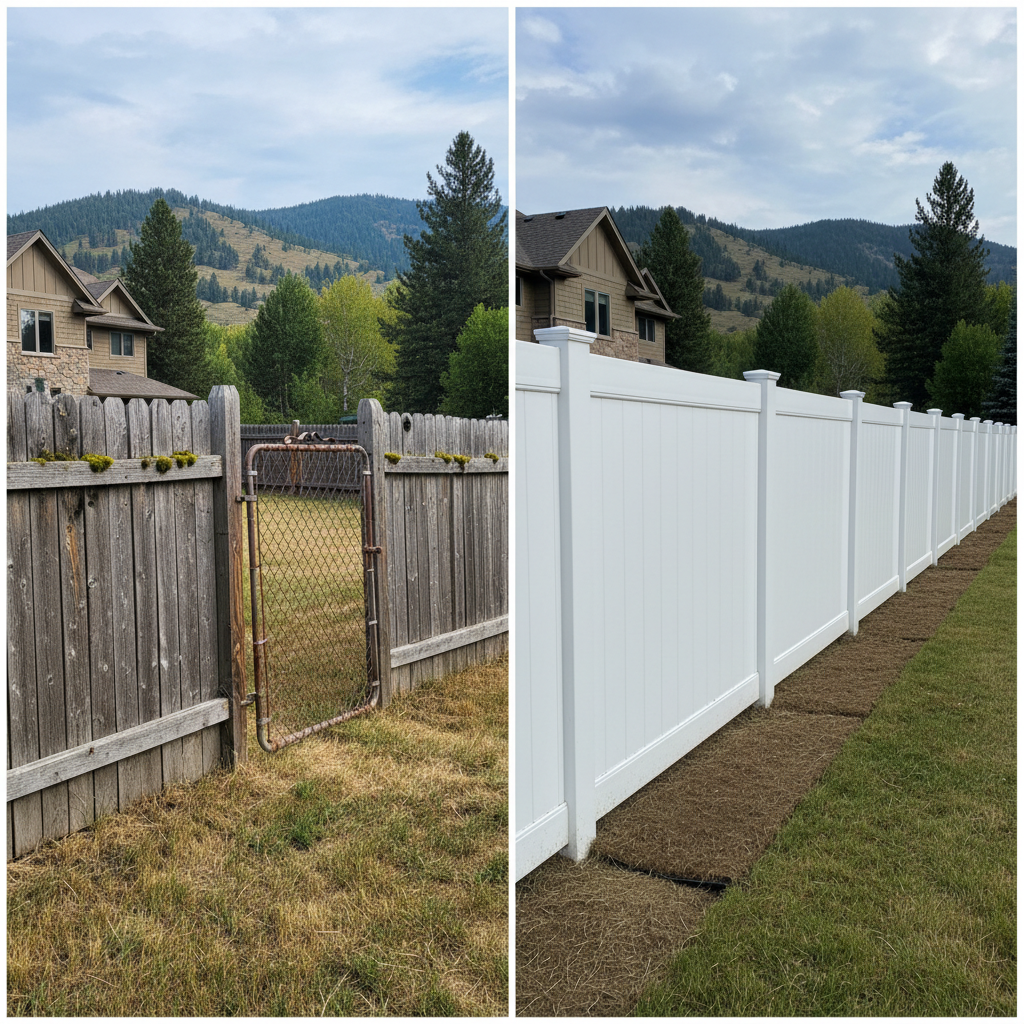
Alright, let's talk vinyl fences. They're a popular pick around Missoula, and for good reason, too: they don't need much upkeep, they look good, and they really stand up to our wild weather. But when you're looking to get one installed, you generally have two main ways to go about it. You can either set the posts and then build the panels right there on-site, or you can use panels that come pre-assembled and just drop into place. I hear folks asking about this all the time, so let's break down what each option means for you.
Post-Set Construction: The Old-School Way
This is the classic method for most fence types, and guess what? It works great for vinyl too. We start by digging the post holes, then we set the vinyl posts in concrete, making sure they're perfectly straight and spaced just right. Once that concrete sets up, we attach the rails and pickets to build the fence panel right there between the posts. It takes a bit more elbow grease on-site, sure, but it gives us a lot of wiggle room.
- Cost: Generally, this method can actually be a little cheaper upfront for materials, especially if we're buying components in bulk. The labor cost might be a touch higher because of all the on-site assembly, but it often evens out in the end.
- Durability: This is where post-set really shines, especially here in Missoula. When you're putting everything together on-site, you can cut rails to the exact length needed, which means a super snug fit. That means less play in the fence, and that's crucial when those heavy winds come howling through the valley or when the ground starts to shift a bit with our freeze-thaw cycles. You end up with a truly custom, solid fence.
- Maintenance: Once it's up, maintenance is just like any other vinyl fence – basically, a quick wash every now and then. But if a single picket or rail gets damaged, it's usually much simpler to replace just that one piece without having to pull down an entire panel.
- Appearance: You get a really clean, continuous look. Because everything is cut and fitted right there, we can handle uneven terrain or slight grade changes much more gracefully, stepping the fence panels or even racking them (if the fence style allows) for a smoother line.
Pre-Assembled Panels: The Quick Fix
With this method, the fence panels arrive from the factory already put together. So, we dig the holes, set the posts, and then, well, we literally just slide or attach the pre-built panels between them. It sounds simple, and in some ways, it is.
- Cost: Material costs for pre-assembled panels can sometimes be higher because you're paying for the factory to do the assembly. Labor costs for installation might be a little lower since it's quicker to just drop panels in, but honestly, the overall price often ends up pretty similar to post-set construction.
- Durability: This is where I've seen some issues, especially with our local conditions. Factory-assembled panels are built to standard widths. If your post spacing isn't absolutely perfect, or if the ground isn't perfectly level, you might end up with panels that are either too tight or too loose. Too loose, and you get more rattle and a bigger chance of damage in high winds. Too tight, and the panel can bow or put stress on the posts. Plus, the connections might not be as strong as something custom-fitted on-site.
- Maintenance: If a single picket or rail gets damaged, you often have to replace the entire panel, which can be both more expensive and a bit wasteful.
- Appearance: They look good when they're brand new, but dealing with slopes or uneven ground can be trickier. You often see more obvious 'steps' in the fence line, or gaps underneath if the ground dips. It's just harder to get that perfectly tailored look, you know?
My Recommendation for Missoula Homeowners
Look, both methods will get a vinyl fence installed. But if you're asking me, for the long haul in Missoula, with our heavy snow loads, gusty winds, and ground that freezes and thaws, I'm going to lean towards post-set construction every single time. It gives you a stronger, more custom-fit fence that's simply better equipped to handle the elements. You get a more solid connection, less rattle, and a fence that's truly built to last.
It might take a little longer on installation day, but that extra bit of care during assembly really pays off big time in durability and longevity. You want a fence that stands strong, not one that's going to start looking flimsy after a few seasons. When Missoula Fencing Company builds a vinyl fence, we really focus on that strength and custom fit because we know what works best around here. It's all about building it right the first time so you don't have to worry about it later.